
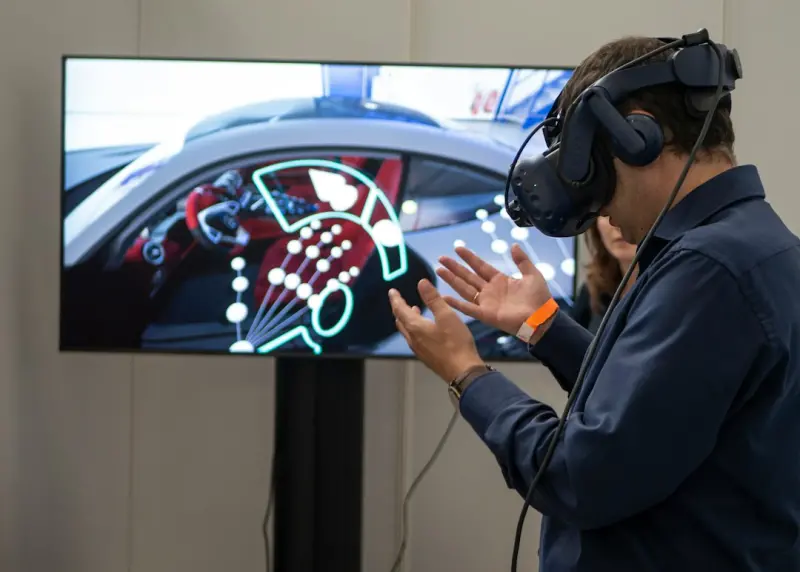
Stepping Into the Future: How Virtual Reality Is Revolutionizing Physiotherapy
When I first walked into a physiotherapy clinic after a rotator cuff injury, the room smelled of antiseptic and the walls were lined with mirrors and foam rollers. The therapist’s hands were steady, her voice calm, and the treatment plan was a series of repetitive exercises that felt more like a chore than a cure. Fast forward a few years, and I’ve seen the same space transformed by a technology that once lived in science‑fiction movies: AI‑Powered Physiotherapy and, more recently, immersive virtual reality (VR). While AI gives us data‑driven insights, VR is handing us a new way to experience movement, motivation, and recovery.
Why VR Is More Than a Gimmick
Virtual reality is often dismissed as a novelty for gamers, but its core strength lies in creating controlled, repeatable environments that can be tailored to a patient’s unique needs. In physiotherapy, this translates to:
- Enhanced Engagement: Patients are less likely to abandon a rehab program when it feels like an adventure rather than a monotone routine.
- Precise Feedback: Motion sensors embedded in headsets and controllers capture real‑time data on joint angles, speed, and symmetry, allowing therapists to fine‑tune exercises on the fly.
- Safe Exposure to Real‑World Challenges: From climbing a virtual mountain to navigating a bustling kitchen, patients can practice functional movements without the risk of real‑world injury.
These benefits are not just theoretical. Clinical trials across orthopedic, neurological, and sports rehab have reported faster functional gains, higher adherence rates, and even reduced pain perception when VR is integrated into treatment plans.
The Science Behind the Immersion
At the heart of VR’s impact is the brain’s ability to reinterpret visual and auditory cues as if they were happening in the physical world—a phenomenon known as presence. When a patient sees themselves reaching for a virtual object, the brain activates the same motor pathways used for real movement. This neuroplastic response accelerates the rewiring needed after injury.
Moreover, the immersive nature of VR can modulate pain through distraction and the release of endogenous opioids. A 2018 study published in Neuroscience Letters demonstrated that patients undergoing VR‑guided shoulder rehab reported up to a 30% reduction in perceived pain compared with traditional therapy.
Integrating VR Into Existing Practice: A Pragmatic Guide
For physiotherapists curious about adding VR to their toolkit, here’s a step‑by‑step roadmap:
- Start Small. Choose a single condition—say, post‑ACL reconstruction—and a low‑cost headset (e.g., Oculus Quest). Many platforms offer ready‑made rehab modules.
- Map Objectives. Align the virtual activities with established rehab milestones: range of motion, strength, proprioception, and functional tasks.
- Train the Team. Ensure therapists understand both the technical setup and the therapeutic intent behind each VR scenario.
- Collect Data. Use the built‑in analytics to track repetitions, speed, and symmetry. This data can complement traditional outcome measures.
- Iterate. Gather patient feedback, tweak the difficulty, and expand the library of scenarios as confidence grows.
Think of VR as an adjunct, not a replacement. Hands‑on manual techniques, therapeutic exercise, and patient education remain foundational. VR simply amplifies the efficacy of those core components.
Case Study: From Stiffness to Symphony
Consider Sarah, a 38‑year‑old graphic designer who suffered a cervical spine sprain from prolonged desk work. Traditional physiotherapy helped her regain mobility, but her motivation waned after two weeks. Introducing a VR module that simulated a serene forest walk—where she needed to turn her head to observe wildlife—transformed her sessions. Within three weeks, Sarah reported:
- Improved neck rotation by 20 degrees.
- Decreased neck pain from 6/10 to 2/10 on the Visual Analog Scale.
- Higher session attendance (100% vs. 70% before VR).
Sarah’s story illustrates how VR can convert a “rehab chore” into an engaging narrative, accelerating both physical and psychological recovery.
Addressing Common Concerns
Cost. While high‑end VR rigs can be pricey, mid‑range devices are now under $400, and many insurance plans are beginning to reimburse for tech‑enhanced therapy.
Motion Sickness. Some users experience cybersickness. Mitigation strategies include short sessions, gradual exposure, and selecting experiences with stable horizons.
Data Privacy. VR platforms collect biometric data. Choose vendors that comply with HIPAA and provide clear consent processes.
Blending VR With Other Cutting‑Edge Modalities
VR doesn’t exist in isolation. When paired with complementary strategies—like Cold‑Thermal Detox for inflammation control or the Unlocking the Lymphatic Highway approach for systemic recovery—patients receive a holistic program that tackles the injury from multiple angles.
Imagine a post‑operative knee patient who first uses contrast therapy to reduce swelling, then engages in a VR mountain‑climbing scenario that challenges knee flexion and balance, all while the therapist monitors lymphatic flow through manual techniques. The synergy amplifies outcomes beyond what any single modality could achieve alone.
The Future Landscape: From Gaming to Clinical Standard
As VR hardware becomes more affordable and software libraries expand, we’re likely to see:
- Prescription‑Grade VR Apps. Clinicians will prescribe specific modules, much like medication.
- Interoperability. Seamless data exchange between VR platforms, electronic health records, and wearable sensors.
- Community‑Based Rehab. Patients can join virtual group classes, fostering social support—a key factor in long‑term adherence.
The convergence of immersive tech, data analytics, and personalized care is setting the stage for a new era where physiotherapy is as engaging as it is effective.
Getting Started Today
If you’re a therapist or a patient eager to explore VR, here are three actionable steps:
- Research. Look for reputable VR rehab apps with clinical validation.
- Pilot. Run a small trial with a handful of patients to gauge feasibility and satisfaction.
- Collaborate. Partner with tech vendors, insurers, and academic institutions to stay ahead of best practices.
The journey from a static clinic room to a dynamic virtual landscape may feel daunting, but the payoff—enhanced recovery, higher engagement, and a more enjoyable patient experience—is worth the leap.
Physiotherapy has always been about movement, adaptation, and resilience. By embracing virtual reality, we’re adding a powerful new dimension to those timeless principles, ensuring that every patient not only heals but thrives in the digital age.

Tom Ferguson is a Canadian freelance writer with a passion for storytelling, current events, and thoughtful commentary. Drawing on years of writing experience, he shares engaging insights on a wide range of topics, bringing a uniquely Canadian perspective to his work.
Related Posts
Beyond the Clinic: How Digital Tools Are Revolutionizing Physiotherapy
Deb Roberts shares her firsthand experience integrating tele‑physio, wearables, virtual reality, a... Read More
Beyond the Clinic Walls: The Virtual Reality Revolution in Physiotherapy
Virtual reality is reshaping physiotherapy by delivering immersive, data‑rich rehab experiences th... Read More

Micro‑Movement Mastery: Turning Everyday Actions into a Physiotherapy Power‑Up
Discover how integrating micro‑movements into everyday actions—like reaching for a coffee mug or... Read More
Top Posts

How Rhythm and Music Can Revitalize Senior Health
Explore the transformative power of music for seniors, from walking to beats to choir singing, and learn practical steps to enhance balance, memory, and wellbei...Read More

Remix Your Routine: Fresh Lifestyle Hacks to Lower Blood Pressure Naturally
Nikki McDonald shares a “remix” approach to blood pressure, blending breathwork, posture tweaks, soothing soundscapes, temperature hacks, and digital bounda...Read More
Why Virtual Reality Is the Next Frontier in Physiotherapy
Virtual reality is more than a novelty; it’s a game‑changing tool that boosts engagement, provides precise feedback, and accelerates healing, ushering physi...Read More

Sleep Hijacks My Calendar—How I Turn Narcolepsy Into a Supercharged Routine
I share my unconventional roadmap for turning narcolepsy’s sudden naps into a powerful, purpose‑driven daily rhythm....Read More
0 Comments
Post Comment
You will need to Login or Register to comment on this post!