
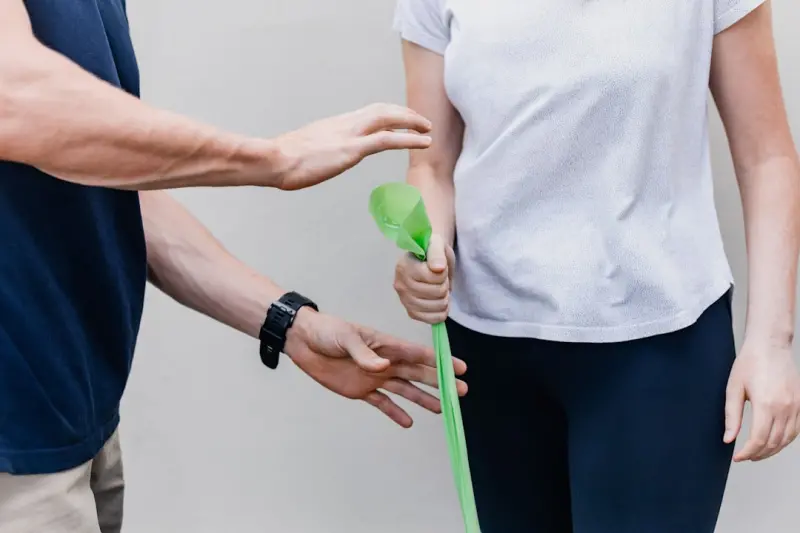
Reimagining Rehabilitation: Why Proprioception Matters More Than Ever
In the bustling world of modern physiotherapy, clinicians are constantly searching for that extra lever to accelerate healing and restore function, and proprioceptive training has emerged as a surprisingly powerful tool. Unlike traditional strength or flexibility work, proprioception focuses on the body’s innate ability to sense its position, movement, and force, creating a feedback loop that fine‑tunes coordination and stability on a subconscious level. When this inner sense is sharpened, patients experience fewer re‑injuries, quicker gait recovery, and a more fluid return to everyday activities, making it a cornerstone for any forward‑thinking therapist looking to elevate outcomes.
Decoding Proprioception: The Body’s Internal GPS
At its core, proprioception is the communication network between muscles, tendons, joints, and the brain, mediated by specialized receptors called muscle spindles and Golgi tendon organs that constantly relay positional data. This silent conversation allows us to walk on uneven terrain without looking at our feet, catch a falling object, or maintain balance during a yoga pose, all without conscious effort. Recent research shows that impairments in this system are linked to chronic ankle instability, post‑stroke motor deficits, and even low back pain, underscoring the need for targeted interventions that restore the fidelity of these signals.
Clinical Benefits: From Faster Recovery to Injury Prevention
Integrating proprioceptive drills into rehab protocols can shorten recovery timelines by up to 30% for common injuries such as ACL tears or ankle sprains, thanks to the rapid re‑education of neuromuscular pathways. Moreover, patients who engage in balance‑centric exercises report heightened confidence in daily tasks, reducing fear‑avoidance behaviors that often stall progress. The ripple effect extends beyond the clinic; athletes see improved performance metrics, and older adults enjoy better fall resistance, illustrating how a sharpened sense of body position translates into real‑world resilience.
Assessing Proprioceptive Deficits: Tools the Therapist Needs
Before prescribing a regimen, therapists must accurately gauge a patient’s proprioceptive baseline using tests such as joint position replication, balance platform analysis, and dynamic postural assessments. These evaluations reveal subtle asymmetries that might be invisible during a standard strength exam, allowing clinicians to tailor interventions with pinpoint precision. In practice, combining subjective patient reports with objective data creates a comprehensive picture, ensuring that each drill addresses the exact neural pathways that require retraining.
Smart Wearables: Data‑Driven Feedback for Personalized Sessions
Wearable technology is redefining how physiotherapists monitor and adjust proprioceptive training, offering real‑time metrics on sway, joint angles, and loading patterns. Devices such as inertial measurement units (IMUs) and pressure‑sensing insoles feed data into mobile apps, granting therapists immediate insight into a patient’s performance outside the clinic walls. This continuous feedback loop empowers clinicians to modify difficulty levels on the fly, reinforcing correct movement patterns while discouraging compensations, ultimately bridging the gap between supervised sessions and home practice.
Case Spotlight: From Stiff Knee to Fluid Motion
A recent client, a 34‑year‑old recreational soccer player, struggled with lingering knee instability after an ACL reconstruction despite completing traditional strength protocols. By incorporating targeted proprioceptive drills—single‑leg hops on an unstable surface, perturbation training, and visual‑feedback balance tasks—paired with an IMU‑based wearable that alerted both therapist and patient to excessive valgus moments, the athlete regained full confidence within eight weeks. The success story echoes findings from studies on muscle memory, illustrating how the brain’s ability to recall refined movement patterns accelerates functional recovery when paired with precise sensory input.
Core Exercises to Elevate Proprioceptive Awareness
- Dynamic single‑leg deadlifts on a wobble board – challenges joint position sense while strengthening posterior chain.
- Eyes‑closed tandem walking on a foam pad – removes visual cues, forcing reliance on vestibular and somatosensory feedback.
- Multi‑directional lunges with resistance bands – adds external load to enhance Golgi tendon organ activation.
- Balance perturbation drills using a therapist‑controlled push platform – simulates real‑world instability.
These drills, when progressed systematically, foster a robust internal map of the body’s mechanics, laying the groundwork for smoother, injury‑free movement patterns. Pairing them with rhythmic breathing techniques, as highlighted in breathwork and rhythm, can further synchronize neural firing, amplifying the proprioceptive signal and promoting relaxation during challenging tasks.
Common Pitfalls: What to Avoid When Implementing Proprioceptive Training
Despite its promise, many therapists stumble by overloading patients with high‑intensity balance tasks before establishing foundational stability, leading to frustration and potential setbacks. Another frequent error is neglecting the integration of visual and vestibular cues, which are essential components of the proprioceptive system; training in a sterile, overly controlled environment can produce gains that quickly dissipate in real‑world settings. Lastly, failing to track progress with objective metrics diminishes the ability to demonstrate improvement, reducing patient motivation and limiting the therapist’s capacity to fine‑tune interventions.
Future Horizons: Merging Neuroscience, AI, and Proprioception
The next wave of physiotherapy will likely blend artificial intelligence with sensor data to predict injury risk and prescribe ultra‑personalized proprioceptive protocols. Machine‑learning algorithms can analyze patterns from wearable logs, identifying subtle deviations that precede re‑injury, and automatically adjust exercise difficulty to keep the nervous system optimally challenged. As research continues to unravel the intricate dance between the brain, muscles, and sensory organs, clinicians who embrace proprioceptive mastery today will be poised to deliver faster, safer, and more sustainable recovery outcomes for tomorrow’s patients.

Brody Lambert is an emerging freelance writer whose fresh voice and thoughtful approach are quickly making their mark. As a fairly new entrant in the world of freelance writing, Brody brings a blend of curiosity and dedication that fuels every project, crafting stories and content that resonate with authenticity and clarity.
Related Posts
Playful Physiotherapy: Turning Recovery into a Game
Explore the power of playful movement in physiotherapy—learn why games, storytelling, and simple p... Read More

Beyond the Stretch: How Emerging Tech Is Redefining Physiotherapy
Discover the latest physiotherapy innovations—from immersive VR rehab and daily micro‑movements ... Read More
The Intersection of Physiotherapy and Mental Health: A Holistic Approach
As a physiotherapist, I've seen firsthand the impact of mental health on physical function. Learn ho... Read More
Top Posts

Finding Balance: My 2026 Mental Health Blueprint
A personal 2026 mental health roadmap blends holistic practices, community support, and mindful tech use to foster lasting resilience and inner balance....Read More
AI‑Powered Physiotherapy: How Smart Tech Is Redefining Recovery
Explore the rise of AI‑powered physiotherapy, where computer vision, smart wearables, and adaptive algorithms deliver personalized, real‑time feedback, blen...Read More

Navigating the Dark: A Personal Blueprint for Taming Sleep Terrors
A candid, expert‑level journey through the hidden triggers of sleep terrors and actionable strategies to reclaim calm nights....Read More

Rewiring the Relationship with Food: A Data‑Inspired, Compassion‑First Approach
A personal guide that blends data tracking, body‑based practices, and supportive communities to help those with eating disorders move from rigid rules to a co...Read More
0 Comments
Post Comment
You will need to Login or Register to comment on this post!