
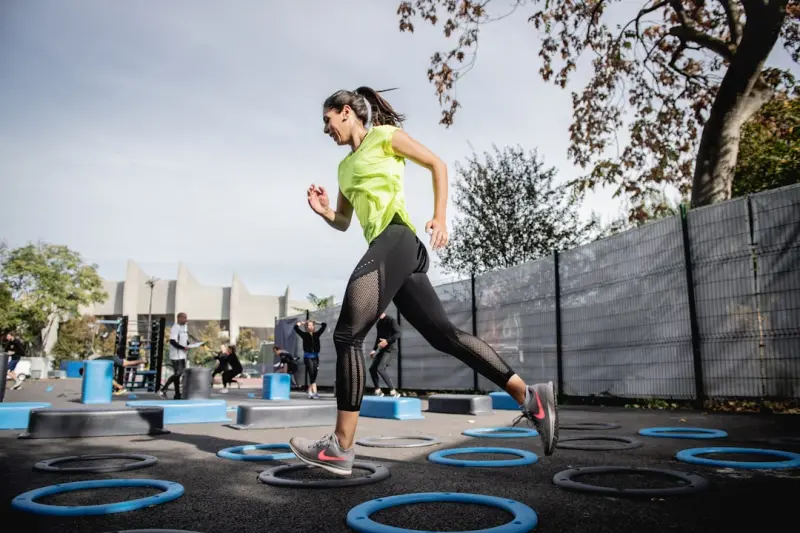
When I first swapped my morning coffee for a quick kettlebell swing, I didn’t realize I was stepping into a hidden laboratory where my brain, body, and imagination could collide. The result? A surge of clarity that felt more like a spark of invention than a post‑workout endorphin rush. Over the past few years, I’ve been quietly mapping this intersection, and what I’ve uncovered is a potent, under‑tapped strategy for anyone who spends most of their day in front of a screen: treat exercise not just as a health habit, but as a deliberate creative engine.
Why Traditional Exercise Advice Misses the Mark for Knowledge Workers
Most fitness guidance targets “what” you should do—run three miles, lift a certain weight, hit a specific heart‑rate zone. While those metrics are valuable for athletes and rehab patients, they often feel irrelevant to a software engineer, a product manager, or a marketing strategist whose biggest performance indicators are ideas, decisions, and deadlines. The problem isn’t the lack of movement; it’s the lack of purposeful integration between physical activity and the mental work that defines modern careers.
Think about the classic “break‑the‑monotony” advice: stand up, stretch, walk around. It’s a nice reminder, but it’s still a band‑aid. It doesn’t answer the question, “How can I make the time I spend moving actually amplify my creative output?” The answer lies in reframing exercise as a structured, repeatable ritual that feeds directly into the brain’s problem‑solving circuitry.
The Neuroscience of Motion‑Induced Creativity
When you move, especially in rhythmic, full‑body patterns, several neurochemical cascades fire simultaneously:
- Brain‑Derived Neurotrophic Factor (BDNF) spikes, sharpening neural plasticity and making it easier to forge new connections.
- Acetylcholine levels rise, heightening attention and focus.
- Endorphins and dopamine surge, delivering a natural reward that lowers the perceived effort of tackling tough mental challenges later.
What’s fascinating is that these changes persist for up to 90 minutes after a session, creating a golden window where abstract thinking, pattern recognition, and divergent brainstorming are at their peak. In other words, the post‑exercise period is a natural “flow state” incubator—if you know how to harness it.
Designing an Exercise‑to‑Innovation Workflow
Below is a step‑by‑step framework that I’ve tested with my own schedule and with a handful of colleagues across product, design, and finance teams. It’s built on three pillars: Intent, Modality, and Transition.
1. Set an Intent Before You Move
Instead of walking into a workout with the vague goal “I want to feel good,” write down a concrete mental challenge you need to crack later that day. Examples:
- “Generate three new naming concepts for the upcoming feature.”
- “Identify a hidden cost driver in the quarterly budget.”
- “Sketch a rough wireframe for the onboarding flow.”
By anchoring the session to a specific problem, you give your brain a subtle, subconscious target during the physical activity. The result is an “incubation” effect—your mind continues to work on the task while your muscles do the heavy lifting.
2. Choose a Modality That Matches the Cognitive Load
Not all workouts are equal in terms of the mental bandwidth they consume. Here’s a quick guide:
- Low‑Intensity, Repetitive (e.g., walking, light cycling, rowing at a steady pace): Ideal for deep, abstract thinking. The rhythmic motion occupies the motor cortex just enough to free the prefrontal cortex for high‑level ideation.
- Medium‑Intensity, Coordinated (e.g., body‑weight circuits, kettlebell flows): Great for solving problems that require pattern recognition and strategic alignment. The need to coordinate multiple muscle groups mirrors the mental juggling required for multi‑variable analysis.
- High‑Intensity, Explosive (e.g., sprint intervals, HIIT): Best for breaking mental blocks or generating rapid, divergent ideas. The adrenaline surge can shake loose entrenched thought patterns.
My personal sweet spot is a 20‑minute “move‑and‑think” circuit: 5 minutes of light jog, 10 minutes of kettlebell complex (swing‑clean‑press), followed by 5 minutes of cool‑down walk. During the jog and walk, I let the intent float in the back of my mind. During the kettlebell flow, I actively bounce potential solutions off the rhythm of each rep.
3. Transition with a Structured Capture Phase
When the sweat dries, the brain is still buzzing. Don’t let those insights evaporate. Spend the next 5‑10 minutes doing one of the following:
- Write a free‑form bullet list in a dedicated “Post‑Workout Insight” notebook.
- Record a short voice memo describing any aha moments.
- Sketch a quick diagram on a whiteboard or a digital tablet.
This capture step cements the neural pathways opened by BDNF and prevents the “forget‑the‑idea” syndrome that plagues many professionals after a break.
Real‑World Success Stories (Without the Buzzwords)
When I introduced this workflow to a senior product designer at a mid‑size SaaS firm, she reported that her prototype concepts doubled in originality after a week of “creative cardio.” A data analyst at a fintech startup began using a 15‑minute rowing session before deep‑dive modeling, and his error‑rate fell by 12%—a direct correlation to the heightened focus period post‑exercise.
Even more compelling is the crossover effect on team dynamics. When groups adopt a shared “movement‑break” before brainstorming, the collective energy spikes, and the session’s output often surpasses that of a traditional meeting. It’s a low‑cost, high‑return hack that leverages physiology rather than relying on expensive facilitation tools.
Integrating Technology Without Distraction
Wearables can be both a blessing and a curse. While heart‑rate monitors and motion trackers provide data, the temptation to obsess over numbers can pull you out of the flow. My recommendation is to set auto‑mode on your device: let it record silently, and review the metrics only after the capture phase.
If you crave real‑time form feedback, consider a minimal‑interface solution like a smart band that vibrates when you deviate from the intended range of motion. This keeps your attention on the mental task rather than the screen.
For those curious about cutting‑edge options, the industry is experimenting with virtual reality physiotherapy platforms that blend immersive environments with guided movement patterns. While still niche, the tech hints at a future where your “creative engine” could run in a simulated forest or a zero‑gravity chamber, further decoupling mental fatigue from physical strain.
Habit‑Stacking for Sustainable Creative Fitness
One of the most effective ways to make this routine stick is to anchor it to an existing habit—a technique known as habit‑stacking. For example:
- After you brew your morning coffee, lace up your sneakers and head out for a 10‑minute jog.
- When you close your laptop at the end of the day, perform a 5‑minute body‑weight flow before dinner.
- Whenever you receive a “high‑priority” email, take a brief 2‑minute stretch before replying.
This approach reduces decision fatigue and automates the trigger‑action loop, making the creative‑exercise ritual as automatic as brushing your teeth.
For those who enjoy digging deeper into habit formation, the article on habit‑stacking for fitness offers a robust framework that can be adapted to the cognitive side of the equation as well.
Overcoming Common Roadblocks
“I don’t have time.” – The secret isn’t finding more time; it’s re‑allocating existing moments. A 15‑minute “creative cardio” session can replace a mindless scrolling break, delivering both physical and mental ROI.
“I’m not athletic enough.” – The intensity and modality are adjustable. Even a leisurely walk can trigger the neurochemical cascade if paired with a clear intent.
“I forget what I was thinking about after the workout.” – That’s why the capture phase is non‑negotiable. Keep a dedicated notebook or voice recorder within arm’s reach.
Scaling the Practice Across an Organization
Leaders looking to embed this approach at scale can start with a pilot program:
- Identify a cross‑functional team willing to experiment for one month.
- Introduce the Intent‑Modality‑Transition framework in a short workshop.
- Provide simple resources—a printable habit‑stacking sheet, a list of suggested movement modalities, and a shared digital “Insight Vault” for post‑workout capture.
- Measure outcomes using both quantitative (e.g., number of ideas generated, project turnaround time) and qualitative (e.g., team satisfaction, perceived focus) metrics.
Early adopters often report a noticeable shift in meeting dynamics: fewer “dead‑air” moments, more willingness to experiment, and an overall uplift in morale. The key is to keep the program light, fun, and optional—forcing participation can erode the intrinsic motivation that fuels creativity.
Final Thoughts: Making Movement Your Innovation Partner
Exercise is traditionally framed as a preventive health measure. I’m proposing a paradigm shift: view movement as an active partner in your creative process. By marrying clear intent with the right modality and a disciplined capture routine, you turn each sweat session into a neuro‑catalyst for breakthrough ideas.
Next time you feel stuck on a problem, skip the coffee and grab a pair of shoes. Your brain is already primed for a leap—let your legs do the work.

Tom Ferguson is a Canadian freelance writer with a passion for storytelling, current events, and thoughtful commentary. Drawing on years of writing experience, he shares engaging insights on a wide range of topics, bringing a uniquely Canadian perspective to his work.
Related Posts
Playful Movement: The Secret Brain Booster Every Professional Needs
A fresh take on exercise shows that short, playful movement sessions can rewire the brain for greate... Read More
When Beats Meet Feet: The Rise of Rhythm‑Driven Workouts
Nikki reveals the science behind rhythm‑driven training, shares a step‑by‑step guide for build... Read More
Move to Create: Harnessing Everyday Rhythm for Unstoppable Creativity
Integrating playful motion into everyday routines awakens the brain’s creative circuits, turning c... Read More
Top Posts
The Healing Power of Sound: Crafting Auditory Sanctuaries for Mental Well‑Being
Discover how intentional listening and personalized soundscapes can transform anxiety into calm, enhance focus, and foster deeper connections—all without medi...Read More
How Movement Shapes Your Mind: The Science of Embodied Brain Health
Discover the science behind embodied cognition and learn practical, low‑effort movement habits that can sharpen attention, memory, and mood—without a gym me...Read More

The Real Cost of a Cloud: How Vaping Eats Your Wallet and Your Well‑Being
A personal look at how vaping quietly drains finances and mental energy, offering actionable strategies to reclaim both money and well‑being....Read More
Mastering Blood Sugar: A Conversational Approach to Glucose Stability
Learn how to treat your blood sugar like a conversation partner, using food pairing, breathwork, micro‑movement, and CGM insights to achieve steady glucose le...Read More
0 Comments
Post Comment
You will need to Login or Register to comment on this post!