
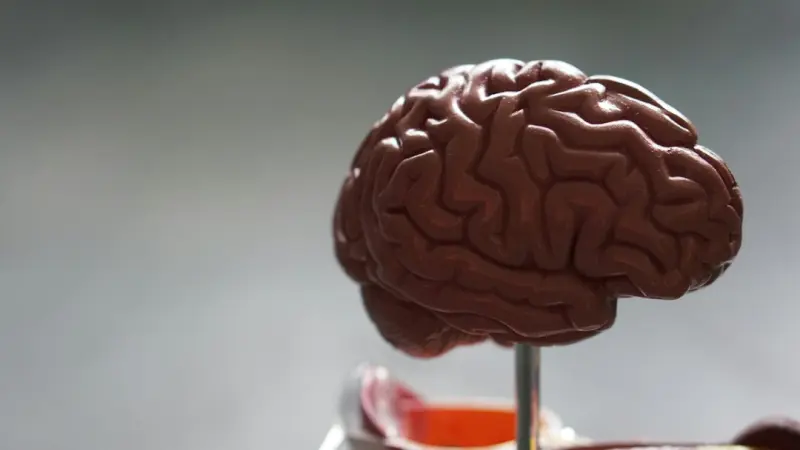
When I first started mapping my own cognitive performance, I realized that the most powerful upgrades weren’t coming from fancy nootropics or high‑tech brain‑training apps. They were showing up in the tiny, unstructured moments that most people dismiss as “just day‑to‑day life.” That revelation sparked a new mission: to treat curiosity not as a nice‑to‑have hobby, but as a daily practice that rewires the brain for resilience, creativity, and sharper thinking.
Why Curiosity Is the Missing Link in Modern Brain Health
Neuroscience tells us that the brain thrives on novelty. Every time we encounter something new, synaptic connections are strengthened, and in some regions—particularly the hippocampus—new neurons are born in a process called neurogenesis. Yet, in a world saturated with information, we’ve become masters of selective attention, often scrolling past the very stimuli that could light up those neural pathways.
Curiosity is the engine that forces the brain to pause, ask questions, and explore alternatives. It triggers dopamine release, which not only feels rewarding but also primes the brain to learn and remember. Think of curiosity as the “fuel injection” for neuroplasticity; without it, even the most advanced brain‑health tools can stall.
Three Everyday Curiosity Practices That Supercharge Neuroplasticity
Below are actionable habits you can weave into your routine without needing a lab coat or a subscription to a premium brain‑training platform.
1. The “One‑Question‑Per‑Day” Challenge
Pick a subject you know little about—a historical event, a scientific principle, an artistic movement—and formulate a single, open‑ended question about it each morning. Spend five to ten minutes digging for answers through articles, podcasts, or conversations. The key is depth, not breadth. By focusing intensively on one query, you engage the prefrontal cortex (decision‑making) and the temporal lobes (memory retrieval) simultaneously.
Over weeks, you’ll notice two effects: increased mental stamina and a richer mental “library” that the brain can draw from when solving unrelated problems. This mirrors the concept of Designing a Mental Architecture for Sustainable Focus and Creativity, but with a twist—here the architecture is built from self‑directed inquiry rather than external frameworks.
2. The “Sensory Switch” Exercise
Our senses are gateways to the brain’s limbic system, the hub for emotion and memory. The “Sensory Switch” involves deliberately altering one sense each day and observing how it reshapes perception. For example, eat a meal in total silence, listen to a favorite song while walking backward, or read a paragraph with a scent diffuser releasing a subtle fragrance.
This simple tweak forces the brain to recalibrate its predictive models, strengthening the neural circuits responsible for adaptability. Research shows that sensory novelty can boost the production of brain‑derived neurotrophic factor (BDNF), a protein that supports neuron growth and survival. The result? A brain that’s more flexible, less prone to “tunnel vision,” and better at integrating new information.
3. “Micro‑Explorations” During Routine Tasks
We all have repetitive daily actions—brushing teeth, commuting, making coffee. Turn these moments into micro‑explorations by asking “what if” scenarios. While making coffee, consider how the brewing temperature affects flavor chemistry. During a commute, map the architecture of the street you’re traveling through, noting patterns in building heights or signage colors.
These brief cognitive detours engage the brain’s default mode network (DMN), which is active during mind‑wandering and creative thinking. By intentionally guiding that wander, you harness the DMN’s power without getting lost in unproductive rumination. It’s a practical, low‑effort way to keep the brain’s “idle” mode constructive.
Integrating Curiosity with Technology—A Balanced Approach
Technology can be both a catalyst and a barrier to curiosity. Immersive tools like virtual reality (VR) can simulate novel environments that are otherwise inaccessible. For instance, the piece Virtual Reality: A New Playground for Senior Minds showcases how seniors can explore historic sites or underwater ecosystems, sparking wonder and reinforcing spatial memory.
However, the danger lies in passive consumption—endless scrolling, algorithm‑driven feeds, and curated news bubbles. To keep technology on the side of curiosity, adopt a “curiosity‑first” filter: before opening a new app or video, ask yourself what you hope to learn or experience. If the answer is “nothing specific,” consider swapping it for a short offline inquiry.
Curiosity as a Social Connector
Human brains are wired for social learning. Sharing questions and discoveries with others amplifies the neurochemical rewards of curiosity. Form “question circles” at work or with friends where each person brings a puzzling query to discuss. This collaborative curiosity not only deepens understanding but also strengthens social bonds, which are themselves protective against cognitive decline.
When you teach others—whether it’s explaining a new concept or demonstrating a skill—you reinforce your own neural pathways. This aligns with findings that “teaching is the unexpected longevity secret,” highlighting how sharing knowledge can extend mental vitality. The act of explaining forces you to reorganize information, creating richer, more accessible memory traces.
Measuring the Impact—Simple Self‑Tracking Techniques
Curiosity is an intangible quality, but its effects can be tracked with basic metrics:
- Question Log: Maintain a notebook or digital note titled “Daily Question.” Review it weekly to see patterns in topics and depth.
- Attention Span Tracker: Use a timer to record how long you stay focused on a curiosity‑driven activity before distraction.
- Memory Recall Test: At month’s end, try to recount the facts or insights you gathered from your daily questions. Note improvements.
These low‑tech measures provide feedback loops that keep you motivated and help you fine‑tune the practice.
Overcoming Common Barriers
Time Scarcity: Treat curiosity as a micro‑investment—just five minutes per day. The compound effect over weeks is far greater than a one‑hour weekly deep dive.
Fear of Looking Silly: Remember that curiosity is a strength, not a weakness. The most innovative leaders are those who ask “stupid” questions that challenge the status quo.
Information Overload: Set boundaries. Choose one source per question (e.g., a single reputable article) and avoid the temptation to “google” everything. Depth trumps breadth.
Future‑Facing Curiosity: Preparing the Brain for Emerging Challenges
As the pace of technological and societal change accelerates, the brain’s ability to adapt will become a critical competitive advantage. Curiosity builds a mental “sandbox” where new ideas can be tested safely. Whether you’re navigating AI‑augmented workflows, learning to code later in life, or adapting to climate‑driven lifestyle shifts, a habitually curious brain will be more agile and less prone to stress.
Incorporating curiosity into corporate culture can also drive innovation. Teams that encourage questioning—without penalizing “failed” ideas—report higher employee satisfaction and faster problem‑solving cycles. Think of curiosity as the invisible scaffolding that supports both personal brain health and organizational resilience.
Conclusion: Make Curiosity Your Daily Brain‑Health Prescription
Brain health isn’t just about diet, exercise, or sleep—though those remain foundational. It’s also about the mental diet you feed your neurons. By deliberately cultivating curiosity through daily questions, sensory experiments, and micro‑explorations, you create a lifelong regimen that fuels neurogenesis, strengthens memory, and builds emotional resilience.
Start small, stay consistent, and watch as the ripple effects transform not only your cognitive performance but also your sense of wonder about the world. The brain, after all, is an organ of discovery—give it the curiosity it craves, and it will reward you with a sharper, more adaptable mind.

Related Posts

Micro‑Creative Rituals: Tiny Daily Practices That Supercharge Your Brain
Micro‑creative rituals—simple, daily acts like doodling or humming—activate the brain’s rewa... Read More
Brain Boost Blueprint: Neuro‑Fitness for the Modern Professional
A deep dive into actionable brain‑health habits—ranging from micro‑learning bursts and strateg... Read More
Brain‑Boosting Digital Minimalism: Reclaiming Focus in a Hyper‑Connected World
A deep dive into practical strategies for reducing screen overload, optimizing tech use, and nurturi... Read More
Top Posts

The Science of Muscle Gain: A Comprehensive Guide to Building Strength
Muscle gain, or muscle hypertrophy, is a complex process that involves a combination of proper nutrition, consistent training, and sufficient rest. Learn how to...Read More

Micro‑Adventures: Tiny Novel Experiences for a Longer, Healthier Life
Micro‑adventures—short, intentional bursts of novelty—stimulate neuroplasticity, diversify the gut microbiome, and activate hormetic stress pathways, offe...Read More

When Insomnia Becomes a Quiet Mentor for Nighttime Innovation
Discover how insomnia can be transformed from a frustrating symptom into a mentor that fuels nighttime creativity, productivity, and holistic well‑being....Read More

Mapping Your Autoimmune Journey: A Data‑Driven Path to Personal Mastery
Learn to turn wearables, gut insights, and hormone rhythms into a personal data ecosystem that predicts autoimmune flare‑ups and puts you back in control....Read More
0 Comments
Post Comment
You will need to Login or Register to comment on this post!