
Why the Quiet Battle Still Echoes in My Kitchen
Even after years of professional training and personal recovery, I still hear the faint click of a timer in the pantry, a reminder that the war against food is often fought in the most ordinary moments. Eating disorders thrive on secrecy, wrapping themselves in routines that look like discipline but mask deep anxiety, and my own story is a mosaic of those hidden patterns. I write this not as an expert lecture but as a fellow traveler who has learned that the most stubborn cravings are often for safety, not calories.
The First Crack: When Control Felt Like a Lifeline
My teenage self discovered that counting every bite gave a fleeting illusion of mastery over a chaotic world, and that illusion quickly hardened into a rulebook of restrictions and punishments. I remember the quiet triumph of fitting into a dress that never seemed to belong, only to feel a hollow victory that left my stomach echoing with emptiness. That early success, however, was a brittle foundation that collapsed the moment stress returned, revealing how fragile control truly is.
Scrolling Through Perfection: The Digital Mirage
Social media platforms serve as glossy galleries where “perfect” bodies are curated, filtered, and posted with a click, creating an ever‑shifting benchmark that never aligns with reality. The algorithmic push for likes amplifies images of sculpted abs and flawless skin, and my feed became a relentless loop of comparison that sharpened my self‑critique into a surgical instrument. When I finally stepped back, I realized that the most damaging voices were not the ones around me, but the silent, pixelated ones whispering from my phone.
Heritage and Hidden Scripts: When Culture Shapes the Narrative
Family meals in my household carried unspoken expectations—thinness as a sign of discipline, indulgence as a moral failing—messages that were passed down like heirlooms and never questioned. These cultural scripts intertwine with personal identity, making the journey toward recovery feel like an act of rebellion against one’s own lineage. Understanding that the pressure to conform is not just personal but communal opened a door to compassionate self‑reflection.
From Body‑Fixation to Body‑Neutrality: A Practical Toolkit
Shifting the focus from how the body looks to how it feels required a deliberate practice that I now share with anyone navigating similar struggles. Below are three daily habits that helped me rewire my relationship with my own physical self:
- Spend five minutes each morning noticing breath and movement without judgment, allowing sensations to guide you.
- Replace weight‑focused language with functional descriptors—“strong,” “flexible,” “supported”—to celebrate capability.
- Engage in a sensory ritual, such as lighting a scented candle while sipping water, to anchor attention in the present moment.
These simple steps, repeated consistently, begin to dissolve the harsh internal narrative that once ruled my thoughts.
Art as Antidote: Harnessing Creativity for Healing
When words failed to capture the turbulence inside, I turned to sketching, collage, and free‑form writing, discovering that each medium offered a safe outlet for emotions that felt too raw for conversation. The act of creating transformed pain into color and shape, turning an abstract dread into something tangible and, ultimately, manageable. I now encourage others to experiment with any form of expression—dance, poetry, photography—as a parallel pathway to nutritional recovery.
Community Storytelling: The Power of Shared Voices
Joining a peer‑support circle where members exchanged personal narratives broke the isolation that had long defined my experience, and the collective vulnerability became a source of strength. Hearing stories that mirrored my own shattered the myth of “I’m the only one,” while offering diverse coping strategies that I could adapt to my life. The simple act of listening—and being heard—proved to be a catalyst for sustainable change.
Integrative Care: Bridging Mind, Body, and Environment
Modern treatment is moving beyond talk therapy to include approaches that address the gut‑brain axis, stress physiology, and even the surrounding landscape. I found particular value in exploring gut‑first strategies, which highlighted how digestive health can influence mood and cravings, offering a tangible target for intervention. Complementing this, regular immersion in nature—whether a park walk or a weekend hike—provided a grounding effect that many clinical settings overlook, a concept explored in nature immersion research.
Looking Forward: A Call to Compassionate Action
Recovery is not a linear climb but a mosaic of small victories, setbacks, and moments of clarity that together form a new narrative of resilience. By acknowledging the silent triggers, honoring cultural complexities, and embracing creative and communal tools, we can rewrite the script that once confined us. I invite you to share your own story, to seek out supportive spaces, and to remember that every step toward self‑acceptance is a triumph worth celebrating.

Sarah Gray is a proud Canadian who calls Brampton home, where she lives with her husband, Paul. A passionate home cook and gifted storyteller, Sarah loves creating delicious recipes and sharing stories inspired by everyday life, family, and cherished experiences. When she isn't experimenting in the kitchen, she's busy crafting engaging content that reflects her warmth, creativity, and love of connection. Above all, Sarah treasures time spent with her grandchildren, embracing every opportunity to create lasting memories with the people she loves most.
Related Posts
Eating Disorders: A Data‑Driven Path to Executive Resilience
Eating disorders silently undermine decision‑making and creativity in high‑performing leaders. T... Read More
Beyond the Scale: How Storytelling Can Rewire Eating Disorder Recovery
A fresh look at eating‑disorder recovery that moves past metrics, using storytelling, sensory lang... Read More
Beyond the Scale: Re‑imagining Eating Disorder Support in a Hyper‑Connected World
A deep dive into how workplace culture, digital tools, and a shift from willpower to whole‑person ... Read More
Top Posts
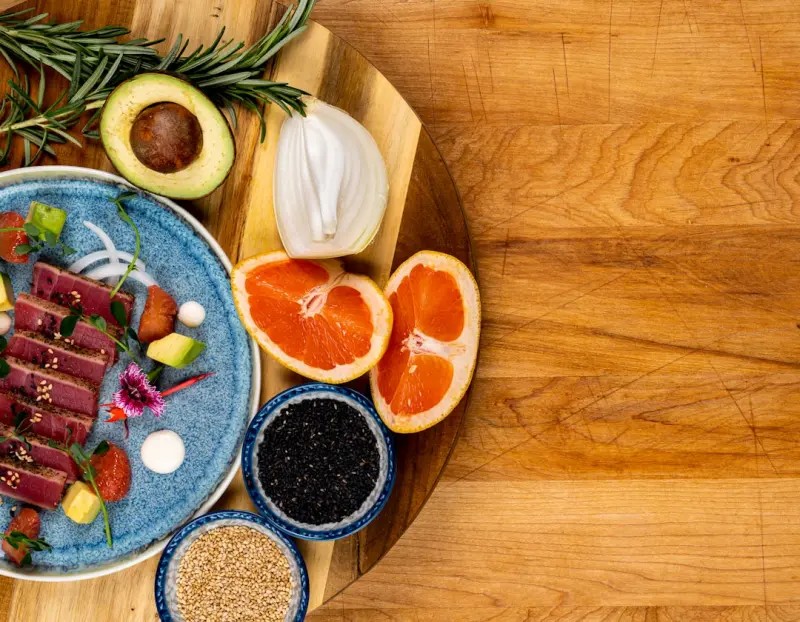
Flavor Chemistry: How Food Pairings Unlock Hidden Nutrients
Explore the science behind food pairings, from black pepper boosting turmeric’s benefits to vitamin C enhancing iron absorption, and learn practical tips to...Read More

Finding Freedom: A Personal Roadmap to Quit Vaping Without Losing Your Spark
A heartfelt guide that blends breathwork, sensory substitutes, nutrition, and community support to help you quit vaping while rediscovering true calm and vitali...Read More

Designing the Senior Home for Safety, Comfort, and Cognitive Vitality
Explore how thoughtful lighting, flooring, sound, scent, and personalized touches can transform senior living spaces into safe, comfortable, and cognitively enr...Read More

A Personal Survival Guide to Sleep Terrors
A heartfelt guide reveals how simple bedroom tweaks, mindful reframing, and community support can transform sleepless terror into calm, restorative nights....Read More
0 Comments
Post Comment
You will need to Login or Register to comment on this post!