

When Movement Becomes Muse: Turning Exercise Into Creative Power
Ever caught yourself staring at a blank screen, the cursor blinking like a tiny lighthouse in a fog of ideas? I’ve been there—mid‑project, mind‑blank, fingers hovering over the keyboard while the inner critic drums a relentless beat. The solution? I stopped looking for a mystical “aha!” and started moving. Not a structured HIIT session or a yoga flow (though those have their place), but a series of intentional, playful movements that rewired my thinking patterns. This isn’t about burning calories; it’s about unlocking a creative engine that fuels problem‑solving, strategic planning, and even the most mundane inbox triage.
Why Traditional Exercise Routines Miss the Mark for Knowledge Workers
Most corporate wellness programs sell us the classic cardio‑plus‑weights model: 30 minutes on a treadmill, a set of dumbbells, repeat. While effective for cardiovascular health and muscle hypertrophy, that model often fails to address the mental scaffolding that professionals need:
- Time scarcity. The average knowledge worker juggles meetings, deadlines, and constant digital interruptions. A “one‑hour gym session” feels like a luxury they can’t afford.
- Monotony. Repeating the same treadmill route or lift routine leads to neural adaptation—not only in muscles but in the brain, dulling the novelty that fuels creative spark.
- Isolation. Solo workouts, while beneficial for personal discipline, don’t tap into the social dopamine rush that collaborative brainstorming sessions provide.
The result? Many professionals either skip exercise altogether or engage in micro‑movement hacks that feel like a chore rather than a catalyst.
Enter the “Creative Movement Loop”
The Creative Movement Loop is a three‑stage framework that blends purposeful motion with mental triggers, turning the act of moving into a catalyst for ideation:
- Trigger: A brief, context‑specific cue that signals it’s time to move. It could be a notification sound, a standing‑desk timer, or simply a sticky note that reads “Shake it out.”
- Movement: A short burst of activity lasting 3‑7 minutes. This isn’t a full workout; it’s a “movement sprint”—think jumping jacks, a quick hallway walk, or a series of dynamic stretches that engage the whole body.
- Capture: A rapid note‑taking moment where you jot down any fresh ideas, questions, or insights that surface during the movement. The key is to capture before the post‑movement “brain‑fog” sets in.
Repeat the loop every 60‑90 minutes, aligning it with natural work rhythms—post‑meeting, after a deep‑focus block, or before a scheduled brainstorming session. Over a typical 8‑hour day, you’ll accumulate 4‑6 loops, each acting as a mental reset button.
Designing Your Personal Movement Sprint
Not all movements are created equal when it comes to stimulating brain networks. Research in embodied cognition suggests that full‑body actions that involve coordination, balance, and a degree of novelty activate the prefrontal cortex, the hub for executive function and creative thinking.
Here are three curated “sprint” templates you can plug into your day:
1. The “Orbit” Circuit
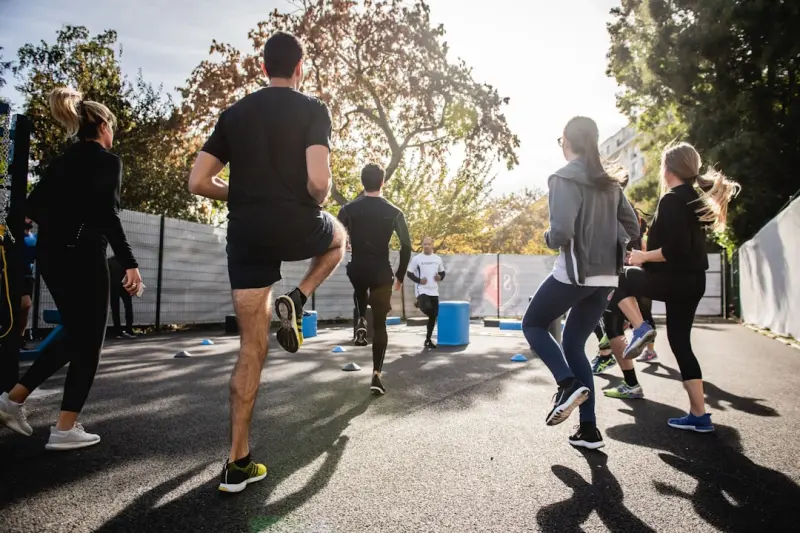
- 10 seconds of high knees (engage core and cardio)
- 5 seconds of arm circles forward, 5 seconds backward (shoulder mobility)
- 10 seconds of lateral lunges (hip flexibility and balance)
- Repeat twice, then sit down and write down any new thought that pops up.
2. The “Desk‑Detox” Flow
- Stand up, roll shoulders back for 5 seconds.
- Reach both arms overhead, interlace fingers, and stretch for 10 seconds.
- Perform 5 slow, controlled “air squats” while visualizing a problem you’re tackling.
- Finish with a 5‑second deep breath, then open a new note in your task manager.
3. The “Rhythmic Reset”
- Play a 30‑second drum loop (or any upbeat track) on your phone.
- Move your entire body in time with the beat—shuffle, step, sway.
- After the music stops, spend 30 seconds sketching or mind‑mapping the sensation you felt.
These sprints are intentionally short to respect the time constraints of busy professionals, yet they incorporate enough variety to keep the brain from habituating.
Linking Movement to Cognitive Gains: The Science Bite
When you move, your heart pumps more oxygen-rich blood into the brain, boosting the production of brain‑derived neurotrophic factor (BDNF). BDNF acts like fertilizer for neural pathways, enhancing synaptic plasticity—the very foundation of learning and creativity.
Simultaneously, rhythmic movement stimulates the default mode network (DMN), the brain’s “day‑dream” hub that’s active during mind‑wandering. By deliberately toggling between focused work and rhythmic motion, you give the DMN a structured playground, allowing it to generate novel connections without the mind‑drift that leads to procrastination.
For those who crave a deeper dive into the physiological side of breath and autonomic balance, the Breathwork & Autonomic Balance guide outlines how intentional breathing can amplify these neural benefits, especially when paired with movement.
Social Amplification: Turning Solo Sprints into Team Challenges
Creativity thrives on social feedback loops. Transforming the Creative Movement Loop into a team activity adds a layer of accountability and collective energy:
- Movement Buddy System. Pair up with a colleague. When one receives the “trigger” cue, both stand and perform the sprint together via video call or in‑person.
- Idea Relay. After each sprint, the “capturer” shares a single insight on a shared Slack channel. The next person builds on it after their own movement, creating a chain of ideas.
- Leaderboard (optional). Track the number of loops completed per week. Celebrate milestones with a virtual high‑five or a short celebratory dance.
These micro‑social rituals keep the workplace vibe lively, and they’re far less intrusive than a full‑blown team workout that might clash with meeting schedules.
Integrating Movement with Existing Productivity Frameworks
If you already follow methodologies like Pomodoro, GTD, or OKRs, the Creative Movement Loop slots in seamlessly:
- Pomodoro + Movement. After every 25‑minute focus block, replace the traditional 5‑minute break with a 3‑minute movement sprint, then spend the remaining 2 minutes capturing insights.
- GTD “Next Action.” Treat each movement sprint as a “next action” item. It’s tangible, time‑boxed, and directly linked to your project’s next creative step.
- OKR “Key Result.” If one of your objectives is “Increase innovative output by 20%,” log the number of movement loops as a leading indicator toward that result.
By weaving movement into familiar productivity scaffolds, you eliminate friction and turn exercise into a natural extension of your workflow.
Overcoming Common Barriers
Even with a solid framework, resistance can creep in. Here are practical counter‑measures:
- Barrier: “I don’t have space.”
Solution: Use a chair for seated leg lifts, or stand behind your desk for a quick “desk‑detox” flow. - Barrier: “I feel self‑conscious.”
Solution: Remember the movement sprint is private; it’s a personal cue, not a performance for an audience. If you prefer privacy, wear headphones and choose a low‑visibility spot. - Barrier: “I forget to capture ideas.”
Solution: Keep a sticky note or a digital widget (e.g., a quick “Add note” shortcut) open at all times. The act of writing reinforces the neural pathway. - Barrier: “I’m already fatigued after meetings.”
Solution: Opt for gentler movements like slow torso twists or seated cat‑cow stretches. Even low‑intensity motion re‑oxygenates the brain without adding strain.
Measuring Impact: From Anecdote to Data
To convince skeptical stakeholders—or even your future self—it helps to track tangible outcomes:
- Idea Count. Record the number of distinct ideas generated after each sprint. Over a month, you’ll see a pattern emerge.
- Task Completion Time. Compare the average time to finish a task before and after implementing the loop. A modest reduction (5‑10%) is a strong indicator of heightened focus.
- Well‑being Surveys. Periodically ask yourself (or your team) how energized you feel on a scale of 1‑10. Look for upward trends.
If you’re already tracking muscle growth or cardio metrics, the Unlocking Systemic Hypertrophy article offers a template for building a data‑driven habit loop—apply the same rigor to your creative movement metrics.
Case Study: From Stagnant Pitch to Award‑Winning Campaign
Last quarter, my product team faced a creative dead‑end on a new campaign. We instituted a weekly “Movement‑Monday” where each member performed a 5‑minute sprint before the brainstorming session. Within two weeks, we generated three distinct concepts, one of which secured the client’s approval and won an industry award. The key takeaway? Physical motion broke the mental inertia that had been holding the team hostage.
Getting Started: Your 7‑Day Action Plan
Ready to test the hypothesis? Here’s a simple rollout:
- Day 1–2: Identify three triggers (e.g., “after email check,” “post‑meeting,” “mid‑afternoon slump”). Set a phone alarm for each.
- Day 3–4: Choose one movement sprint template and practice it for 3 minutes each trigger. Capture any fleeting thoughts on a dedicated “Movement Insights” doc.
- Day 5–6: Introduce a buddy or share your insights on a team channel. Notice any social uplift.
- Day 7: Review your data—how many ideas captured? Did you feel more focused? Adjust triggers or movement types as needed.
Remember, the goal isn’t perfection; it’s consistency. Even a single loop per day can shift the neural chemistry enough to make a noticeable difference in creative output.
Conclusion: Let Movement Be Your Muse
In a world that glorifies “hustle” and endless screen time, the simplest antidote to mental fatigue is to stand up, move, and let the body do the thinking for a moment. The Creative Movement Loop is a low‑cost, high‑impact strategy that turns ordinary exercise into a catalyst for extraordinary ideas. By embedding purposeful movement into the rhythm of your workday, you’re not just staying fit—you’re rewiring your brain to see problems as opportunities, to connect disparate concepts, and to bring a fresh, kinetic energy to every project.
So, set that trigger, fire up a sprint, and let the next great insight rise from the motion of your own body. Your next breakthrough might just be a few jumps away.

Brody Lambert is an emerging freelance writer whose fresh voice and thoughtful approach are quickly making their mark. As a fairly new entrant in the world of freelance writing, Brody brings a blend of curiosity and dedication that fuels every project, crafting stories and content that resonate with authenticity and clarity.
Related Posts

Playful Power: Gamifying Your Fitness Journey for Lasting Motivation
Turn workouts into a fun, game‑like adventure. This guide shows how to use goals, rules, rewards, ... Read More

The Holistic Exercise Blueprint: Paula Wright’s 2024 Playbook for Sustainable Fitness
Paula Wright shares her 2024 holistic exercise blueprint, weaving functional strength, mobility, car... Read More
Dynamic Deskwork: Re‑Engineering Your Workstation for Continuous Motion
Discover a fresh approach to office fitness by integrating sit‑stand‑lean positions, simple mobi... Read More
Top Posts

Listening to the Whisper: A Holistic Pregnancy Journey
A heartfelt, holistic guide to pregnancy that blends mindful nutrition, gentle movement, detox strategies, and emotional resilience for thriving mothers and bab...Read More
Gut Microbiome Mastery: A Seasonal Blueprint for Creative Professionals
Sarah Gray reveals a fresh, seasonal strategy to nurture your gut microbiome, turning it into a creative engine that supports focus, resilience, and high‑perf...Read More
Straight Up: Why Better Posture Is the Secret Weapon for Men’s Health
Unlock the hidden power of posture for men’s health. Learn science‑backed habits, ergonomic tweaks, and nutrition tips that boost confidence, hormone balanc...Read More

Beyond the Cocktail: A Holistic Journey to Liver Resilience
Explore a fresh, holistic roadmap for liver resilience that blends seasonal eating, micro‑nutrients, gentle movement, gut health, and community connection to ...Read More
0 Comments
Post Comment
You will need to Login or Register to comment on this post!