
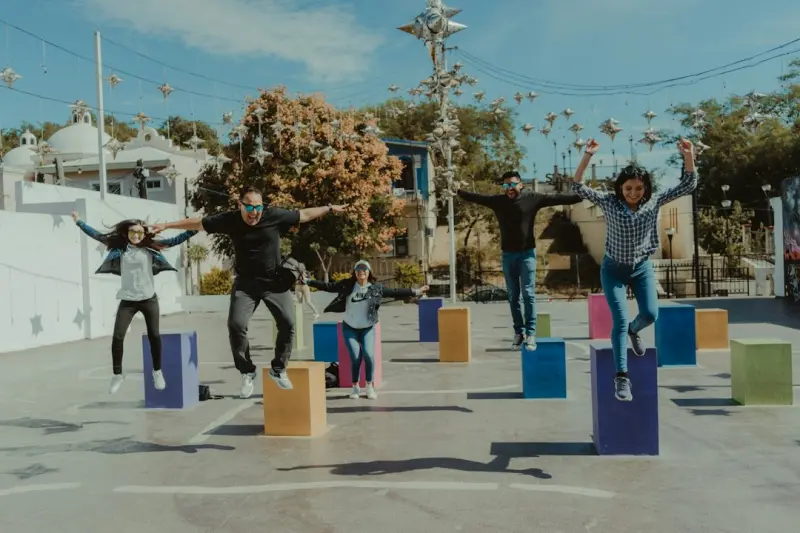
The Longevity Leap: Why Community, Play, and Purpose Matter More Than Any Supplement
When I first stumbled onto a research paper linking social bonds to cellular repair, I felt like I’d found the missing piece of a puzzle I’d been assembling for years. All the buzz around no‑code health apps, bio‑hacking supplements, and AI‑driven fitness plans can feel like a whirlwind—exciting, but often fleeting. What if the most powerful lever for a longer, healthier life isn’t a gadget at all, but a habit we’ve been practicing since childhood? In this post, I’m pulling back the curtain on three deceptively simple, yet profoundly scientific, practices: intentional community, purposeful play, and a clear sense of purpose.
1. The Science of Belonging: Social Connection as a Longevity Gene
Human beings are wired for connection. Evolutionary biologists tell us that our ancestors survived because they hunted, gathered, and cared for each other in tight‑knit groups. Modern research translates that ancient wiring into measurable health outcomes. A landmark study from the Harvard T.H. Chan School of Public Health found that strong social ties can reduce the risk of mortality by up to 50 %—an effect comparable to quitting smoking.
What’s happening at the cellular level? Social interaction triggers the release of oxytocin and endorphins, which in turn down‑regulate inflammatory pathways. Chronic inflammation is the silent engine behind heart disease, Alzheimer’s, and even certain cancers. By simply cultivating richer relationships, we give our bodies a biochemical “reset button.”
For busy executives, the challenge isn’t a lack of people, but the scarcity of meaningful interaction. Short, transactional emails won’t cut it. You need rituals—weekly coffee chats, cross‑departmental “idea lunches,” or community volunteer days—that foster genuine connection. Think of these gatherings as “micro‑dose” longevity interventions: small, repeatable, and deeply impactful.
2. Play Isn’t Just for Kids: Structured Play as a Cellular Rejuvenator
Play is often dismissed as frivolous, especially in the corporate world where “serious work” gets the badge of honor. Yet neuroscience tells a different story. When we engage in playful activities—whether it’s a quick game of ping‑pong, improvisational theater, or a strategic board game—our brains release dopamine and norepinephrine, neurotransmitters that enhance neuroplasticity and support the growth of new synapses.
Beyond the brain, playful movement stimulates the production of human growth hormone (HGH) and activates the autophagy pathway, a cellular cleaning process that removes damaged proteins and organelles. Autophagy is the same mechanism triggered by intermittent fasting, but it can be accessed more frequently through short bursts of joyful activity.
Practical ways to embed play at work:
- Gamify milestones. Turn quarterly targets into friendly competitions with tangible, low‑stakes rewards.
- Micro‑break challenges. Encourage teams to spend five minutes every hour on a quick physical or mental game.
- Creative labs. Reserve a “playroom” where employees can experiment with prototypes, doodle, or tinker without agenda.
These pockets of play act like “software patches” for our biology, keeping the system robust against the wear and tear of high‑pressure environments.
3. Purpose: The Compass That Aligns Body, Mind, and Business
If social connection is the fuel and play is the spark, purpose is the engine that keeps the car moving forward. Studies from the University of Michigan show that individuals with a strong sense of purpose live, on average, five years longer than those without. The mechanism is multi‑layered: purpose reduces stress hormones, improves sleep quality, and even encourages healthier lifestyle choices (like regular exercise and balanced nutrition).
In a corporate setting, purpose can be cultivated through “impact mapping.” Start by asking each team member: “What problem do you want to solve for the world?” Then align that answer with the company’s strategic objectives. When employees see their daily tasks as contributions to a larger narrative, motivation spikes, turnover drops, and, surprisingly, biomarkers of longevity improve.
4. Integrating the Trio: A Blueprint for a Longevity‑Focused Culture
Now that we’ve unpacked the three pillars, let’s weave them into a practical framework you can roll out next quarter.
- Community Audits. Conduct a quick survey to gauge how connected employees feel to their peers and the broader mission. Identify gaps and set measurable targets (e.g., increase “sense of belonging” scores by 20 %).
- Play Sprints. Introduce a bi‑weekly “Play Sprint” where teams allocate 30 minutes to a novel, low‑stakes game that requires collaboration. Track participation and note any spikes in creativity or problem‑solving metrics.
- Purpose Workshops. Host quarterly workshops that help staff articulate personal purpose statements and map them to company goals. Use these statements in internal communications to reinforce alignment.
When these initiatives are consistently reinforced, they become part of the organizational DNA—much like a well‑engineered SaaS product that updates itself automatically.
5. The Microbiome Connection: A Hidden Ally in Social Health
While community, play, and purpose are the visible levers, there’s an invisible partner that amplifies their impact: the gut microbiome. A thriving microbial ecosystem not only supports digestion but also produces short‑chain fatty acids that modulate mood and social behavior. In other words, a healthy gut can make you more empathetic, more open to collaboration, and better at handling stress.
If you’re curious about turning your microbiome into a strategic advantage, check out our deep dive on why your microbiome should be your next business KPI. It outlines how tracking microbial diversity can become a predictive metric for employee well‑being and, ultimately, longevity.
6. From Gut to Goal: Leveraging Nutrition for Longevity Performance
Nutrition is the bridge that links social habits to cellular health. The gut‑focused playbook for high‑stakes decision makers demonstrates how targeted dietary strategies—like polyphenol‑rich foods and fermented products—can enhance both cognition and resilience. When you pair those nutritional tweaks with intentional community events (think pot‑luck lunches featuring probiotic‑laden dishes), you create a feedback loop where food fuels connection, and connection fuels longevity.
7. A Fresh Lens on Healthy Aging
All of the above dovetails nicely with the concepts explored in our healthy aging blueprint. That piece emphasized curiosity as a driver for lifelong learning. Here, we add that curiosity thrives in environments rich with social interaction, playful experimentation, and purpose‑driven challenges. In short, when you build a culture that celebrates these three elements, you’re also laying the groundwork for a curious, adaptable, and ultimately longer‑lived workforce.
8. Measuring Success: Longevity Metrics That Matter
Traditional HR dashboards focus on turnover, engagement scores, and productivity. To truly gauge the impact of these longevity practices, consider adding the following data points:
- Biomarker tracking. Quarterly assessments of inflammatory markers (CRP, IL‑6) and heart‑rate variability.
- Social network analysis. Map the frequency and depth of cross‑functional collaborations.
- Play participation index. Measure attendance and qualitative feedback from play sprints.
- Purpose alignment score. Survey employees on how well they feel their work aligns with personal purpose.
When you see improvements across these metrics, you have concrete evidence that your longevity initiatives are not just feel‑good fluff—they’re moving the needle on health, performance, and retention.
9. Overcoming Common Barriers
Implementing community‑centric, playful, purpose‑driven programs can feel daunting. Here are three frequent objections and how to address them:
- “We don’t have time.” Counter with data showing that even 5‑minute micro‑breaks improve focus and reduce error rates, ultimately saving time.
- “It’s not our culture.” Start small with pilot teams, gather success stories, and let the data speak for itself.
- “ROI is unclear.” Link each initiative to measurable outcomes—lower healthcare costs, higher employee NPS, and reduced absenteeism.
10. A Personal Note from My Desk
At the end of a hectic week, I make it a point to host a “Friday Play Hour” for my team. We rotate games—sometimes it’s a quick round of improv, other times a puzzle challenge. I’ve watched colleagues who rarely speak up in meetings blossom during those sessions, sharing insights that later become game‑changing ideas. The ripple effect? Stronger bonds, higher morale, and, according to my health tracker, better sleep and lower resting heart rate.
If I can see measurable benefits in my own micro‑environment, I’m convinced that scaling these practices can reshape the very definition of corporate longevity.
Conclusion: Longevity Is a Lifestyle, Not a Gadget
We live in an era where tech promises to add years to our lives, but the most reliable, sustainable, and human‑centric levers are already in our hands. By consciously building community, infusing play, and clarifying purpose, we create an ecosystem where the body’s repair mechanisms are constantly engaged. Pair that with a gut‑friendly diet and smart biometric monitoring, and you’ve got a longevity strategy that rivals any high‑priced supplement regimen.
So, the next time you hear someone brag about their newest wear‑able, ask them: “What’s your plan for deeper connection, intentional fun, and meaningful work?” The answer could be the secret sauce for not just a longer life, but a richer, more vibrant one.

Tammy French is a Montessori Teaching Assistant and freelance writer passionate about education, creativity, and inspiring lifelong learning through engaging content.
Related Posts
The Longevity Edge: Harnessing Purpose and Adaptive Resilience
A purpose‑first approach to longevity combines neuroscience, hormesis, social contribution, and en... Read More
The Hidden Longevity Hack: Building a Brain Fitness Routine for Busy Professionals
A practical guide shows busy professionals how to boost longevity by treating their brain like a hig... Read More
Brain‑Gym for Longevity: How Continuous Learning Fuels a Longer Life
Explore the emerging science that links deliberate learning and neuroplasticity to cellular repair, ... Read More
Top Posts
Nutrient Pairing Alchemy: Turning Everyday Meals into Bioavailability Boosters
Learn why combining specific foods can dramatically improve nutrient absorption and overall performance. This guide offers science‑backed pairings, timing str...Read More

Why Nightmares Matter More Than You Think
Sleep terrors are the dark underbelly of the night that most high‑performance professionals brush off as “just bad dreams.” In reality, they are neuro‑c...Read More

Night Terrors Unlocked: A Data‑Driven Playbook for Restoring Calm
Night terrors can cripple productivity, but a data‑driven, holistic playbook—covering metabolism, gut health, environment, and emerging tech—offers action...Read More

Mastering the Mind‑Muscle Connection for Faster Muscle Gain
I’ve learned that muscle growth isn’t just about lifting heavy; it’s about training the brain to fire each fiber. In this guide, I reveal the mental cues,...Read More
0 Comments
Post Comment
You will need to Login or Register to comment on this post!