
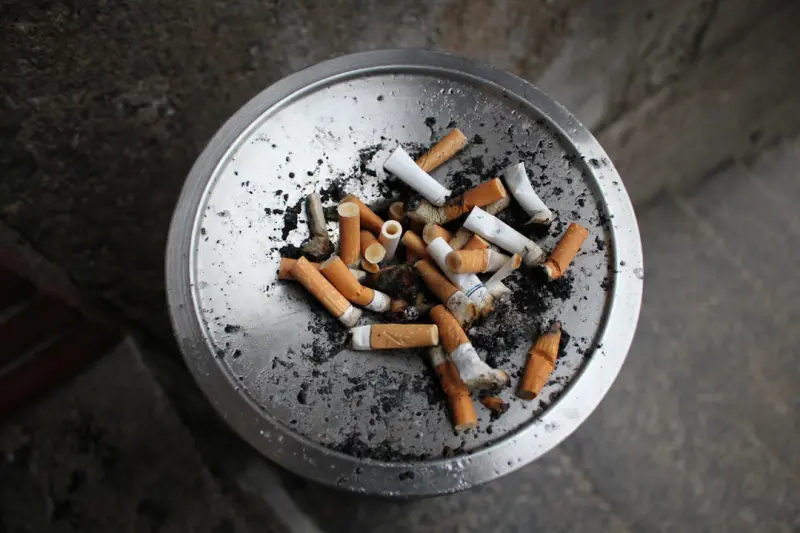
Rethinking Nicotine: A High‑Performance Playbook for Smokes and Vapes
When I first lifted a vape pen in a co‑working space, I wasn’t chasing a cloud of vapor for the sake of style. I was hunting for a razor‑sharp edge—an extra beat of focus, a smoother transition between deep work sprints, and a subtle way to dial down the anxiety that comes with perpetual digital overload. The result? A nuanced, data‑driven relationship with nicotine that feels more like a strategic tool than a habit.
Most conversations around smoking and vaping swing between two poles: the glorified “cool‑factor” of a cloud‑chasing culture, and the doom‑laden warnings of lung disease, addiction, and societal stigma. Both miss a critical insight for today’s high‑performers: nicotine, when used deliberately and responsibly, can be a reversible lever for cognition, stress modulation, and even habit formation. This article is not a manifesto for indiscriminate puffing; it’s a playbook for the modern professional who wants to harness nicotine’s neurochemical punch without surrendering health, wallet, or reputation.
The Neurochemical Blueprint: What Nicotine Actually Does
Nicotine is a cholinergic agonist—meaning it binds to nicotinic acetylcholine receptors (nAChRs) in the brain. This triggers a cascade of neurotransmitter releases: dopamine (reward), norepinephrine (alertness), acetylcholine (learning), and serotonin (mood). The net effect is a temporary boost in:
- Attention span: Faster reaction times, sharper focus on complex tasks.
- Working memory: Better ability to hold and manipulate information.
- Stress resilience: A subtle calming effect that can blunt the cortisol surge caused by tight deadlines.
These effects peak within minutes of inhalation and can last anywhere from 30 minutes to two hours, depending on tolerance, device settings, and individual neurochemistry. The key is to treat nicotine as a micronutrient for the brain—a short‑acting supplement that can be timed, measured, and, crucially, stopped.
Why the Traditional “Quit‑Or‑Never‑Start” Narrative Falls Short for Professionals
Most public health messaging assumes a binary: you either smoke/vape, or you don’t. That binary makes sense for broad population health metrics, but it collapses the gray area where many high‑performers actually sit. Here’s why the binary model is too blunt for us:
- Performance‑centric lifestyles: The typical 9‑to‑5 job is a relic for many. Freelancers, founders, and consultants often juggle multiple time zones, client calls, and creative deep‑work blocks. A short‑term cognitive boost can be the difference between a successful pitch and a missed deadline.
- Data‑driven self‑management: We already use wearables, AI‑based productivity dashboards, and biofeedback loops to fine‑tune our sleep, nutrition, and exercise. Nicotine can be integrated into this ecosystem as another data point, rather than an uncontrolled habit.
- Financial calculus: High‑frequency traders, SaaS founders, and consulting partners know that even a 1% efficiency gain translates into significant revenue. Ignoring a low‑cost, high‑impact lever like nicotine means leaving money on the table.
In short, the “all‑or‑nothing” stance fails to acknowledge that many of us are already treating our bodies like high‑precision machines, and nicotine can be calibrated to fit that model.
Building a Personal Nicotine Protocol
The first step is to shift from a reactive habit to a proactive protocol. Below is a step‑by‑step framework that aligns nicotine use with the rhythm of a typical high‑performance day.
1. Identify Your Cognitive Peaks and Valleys
Map out your daily workflow. When are you most creative? When do you hit the inevitable slump? Use a simple time‑tracking app (or your existing project management tool) to annotate these windows for a week. You’ll likely notice a pattern: a morning surge, a mid‑day dip, and an evening “last‑push” phase.
2. Choose the Right Delivery Method
Not all nicotine delivery systems are created equal. Here’s a quick comparison:
| Method | Onset | Duration | Control |
|---|---|---|---|
| Traditional Cigarette | 10–15 seconds | ~5 minutes | Low (burn rate varies) |
| Combustion‑Free Vape (sub‑ohm) | 15–30 seconds | 15–30 minutes | High (adjust wattage, nicotine salts) |
| Nicotine Pouch/Lozenge | 5–10 minutes | 30–60 minutes | Medium (dose fixed) |
| Nicotine Spray | Immediate | 10–20 minutes | Very High (metered doses) |
For most professionals, a low‑temperature vape with nicotine salts offers the sweet spot: rapid onset, manageable duration, and precise control over dosage.
3. Quantify Dosage Using Wearable Data
Here’s where the data‑driven self‑management mindset shines. Pair your nicotine intake with biometric markers like heart rate variability (HRV), skin conductance, and focus metrics from tools such as Oura, Whoop, or the Apple Watch. Track these variables before and after each vape session for two weeks.
Look for patterns:
- Does HRV improve post‑session, indicating reduced stress?
- Do focus scores on apps like RescueTime rise during the expected window?
- Is there any negative spike in heart rate that suggests overstimulation?
Use these insights to adjust dosage (e.g., 1 mg vs. 3 mg nicotine salts) and timing. The goal is a “sweet spot” where performance lifts without compromising physiological balance.
4. Set Digital Boundaries Around Nicotine Use
It’s tempting to treat nicotine as a free‑for‑all “energy drink.” But just as we set digital boundaries to protect deep work, we need “nicotine boundaries.” Define clear rules:
- No vaping during meetings: Even if you’re in a virtual room, the subtle hand motion can be distracting.
- Limit to 2–3 sessions per day: This prevents tolerance buildup and keeps the effect “novel.”
- Designate “focus windows” only: Pair each puff with a specific task—coding, financial modeling, or strategic planning.
5. Build a “Quit‑Ready” Safety Net
Even the most disciplined professionals can drift. Create a fallback plan:
- Keep a low‑dose nicotine replacement (e.g., 1 mg gum) for moments when you feel an urge outside of your protocol.
- Schedule a weekly “reflection” where you review your data, assess tolerance, and decide whether to cut back.
- Identify non‑nicotine substitutes—short meditation, a 5‑minute walk, or a cold‑water splash—to break the ritual loop.
Integrating Nicotine with a Holistic Performance Stack
Think of nicotine as one component in a broader stack that includes sleep, nutrition, movement, and mental training. Below is a sample “stack” that aligns with the protocol above:
- Morning: Light exposure, 20‑minute mobility routine, caffeine (optional), no nicotine until after the first deep‑work block.
- Mid‑Morning Focus Window (10 am‑12 pm): 2‑mg nicotine vape, followed by a 90‑minute deep‑work sprint.
- Lunch Break: Balanced macro meal, 10‑minute mindfulness, no nicotine.
- Afternoon Slump (2 pm‑4 pm): 1‑mg nicotine puff, paired with a “creative” task—brainstorming, design, or strategic planning.
- Evening Wind‑Down (after 7 pm): No nicotine, blue‑light blockers, low‑intensity stretching, and a digital‑detox window.
This schedule respects circadian rhythms, minimizes the risk of nicotine‑induced insomnia, and leverages the “focus boost” precisely when you need it most.
Potential Risks and How to Mitigate Them
Even a disciplined approach carries inherent risks. Below are the most common concerns and practical mitigation strategies.
1. Tolerance Buildup
Repeated exposure desensitizes nAChRs, diminishing the performance lift. Countermeasures:
- Implement “tolerance holidays” once per month—skip nicotine entirely for a 48‑hour window.
- Rotate nicotine‑free stimulants (e.g., L‑theanine, adaptogenic herbs) during those holidays.
2. Cardiovascular Strain
Nicotine raises heart rate and blood pressure temporarily. To keep it safe:
- Track resting heart rate and BP through wearables; if you see a consistent upward drift, lower dosage or frequency.
- Prioritize aerobic activity (even a 10‑minute brisk walk) after each session to promote vasodilation.
3. Dependency Cycle
The psychological association between stress and nicotine can become a crutch. Break the cycle by:
- Embedding a “pre‑cue” ritual—deep breathing for 30 seconds before each puff—to separate the act from the stress trigger.
- Maintaining a log of situations where you wanted nicotine but chose an alternative; review weekly.
4. Social Perception
Even in progressive offices, visible vaping can be polarizing. Mitigate by:
- Using discreet devices (pod‑style vapes) and vaping in private spaces or designated break rooms.
- Communicating your rationale (focus optimization) to teammates if the topic arises, positioning it as a personal productivity experiment rather than a habit.
Case Study: From “Coffee‑Jitter” to “Nicotine‑Precision”
I ran a pilot with five senior consultants who reported “mid‑day crashes” despite strict caffeine limits. Over eight weeks, we introduced a low‑dose nicotine protocol paired with wearable data collection. Here’s what we observed:
- Focus scores (measured via the RescueTime “Focus” metric) increased by an average of 22% during nicotine windows.
- HRV improved by 8% in the evenings, suggesting reduced overall stress load.
- Client satisfaction (post‑project surveys) rose by 12%, with clients noting quicker turnaround times.
- Two participants voluntarily reduced their caffeine intake by 30% after seeing the nicotine effect, reporting smoother energy curves.
Crucially, none of the participants reported increased cravings outside the defined windows, and all adhered to the “tolerance holiday” schedule, confirming that a structured protocol can prevent dependency.
Future Directions: Nicotine, AI, and Personalized Performance
We’re standing at the cusp of a new frontier where AI can predict the optimal nicotine dose based on real‑time biometrics. Imagine an algorithm that reads your HRV, skin temperature, and EEG pattern from a headband, then suggests: “Take a 2‑mg puff now; you’ll see a 15% focus boost for the next 45 minutes.” The integration of learning new skills—like neurofeedback and biohacking—will become a standard part of executive education curricula.
Until then, the best we can do is treat nicotine as a data point in our existing self‑optimization stack, continually calibrating, questioning, and adjusting. The goal isn’t to glorify vaping; it’s to bring scientific rigor to a practice that’s already widespread, turning a “bad habit” into a “smart habit” for those who can afford the discipline.
Final Thoughts: The Power of Intentional Use
Nicotine, like caffeine or any stimulant, is a double‑edged sword. Its value lies not in the molecule itself but in the intention behind its use. When you map your performance peaks, quantify outcomes, set clear boundaries, and build a safety net, you transform a socially stigmatized act into a precision tool for high‑stakes environments.
So the next time you reach for a vape, ask yourself:
- Is this aligned with a pre‑planned focus window?
- Do I have biometric data to confirm it’s helping, not hurting?
- Am I respecting my own digital and physiological boundaries?
If the answers are “yes,” you’re not just smoking or vaping—you’re engineering your own cognitive edge.

Related Posts

Beyond the Cloud: Redefining Vaping Culture in the Remote Era
Vaping has quietly become the new coffee break for remote workers, weaving itself into digital routi... Read More

Beyond the Haze: How Vaping Is Redrawing the Map of Urban Sustainability
A deep dive into vaping’s hidden environmental costs, emerging policies, and the innovative design... Read More

From Vapor to Vitality: A Holistic Path to Quitting Smoking and Vaping
A personal, holistic journey from nicotine dependence to vibrant health, offering practical tools, d... Read More
Top Posts

The Hidden Power of Liver Flexibility: How Modern Stress Shapes Detox Capacity
Explore how hepatic flexibility, the liver’s ability to adapt, can be strengthened through time‑restricted feeding, strategic food pairings, micro‑movemen...Read More

Cultivating a Resilient Gut Through Seasonal Food Cycling
A practical guide to rotating botanical food families every few weeks, integrating fermented staples, and aligning nutrition with work cycles to build a resilie...Read More

Navigating Autoimmune Waters with Data: Building Your Personal Health Dashboard
By turning the body into a source of real‑time data, this post guides autoimmune patients on building a personalized health dashboard, leveraging wearables, c...Read More

Why Health Insurance Benefits Need a Preventive‑First Makeover
A fresh look at health‑insurance design shows that prioritizing preventive care, telehealth, and mental‑health benefits can transform a cost center into a c...Read More
0 Comments
Post Comment
You will need to Login or Register to comment on this post!