
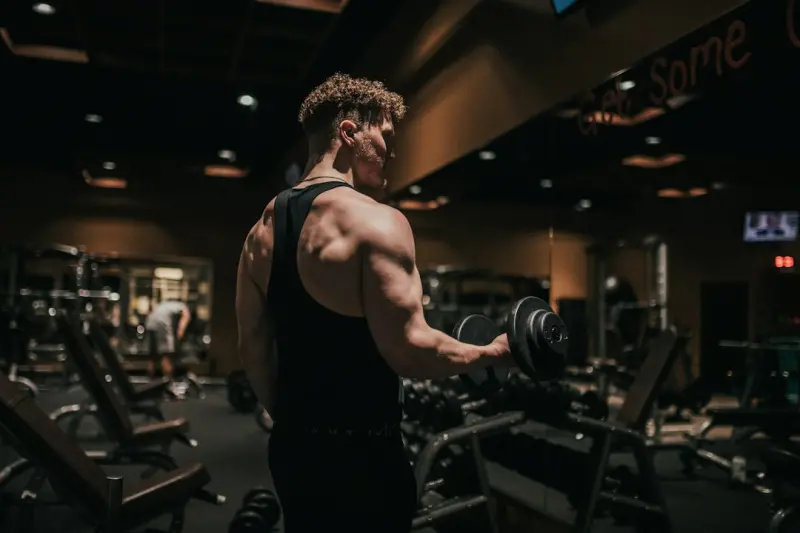
Why Your Wearable Might Be the Missing Piece in Your Muscle‑Gain Puzzle
When I first swapped my notebook for a sleek wrist‑bound sensor, I expected a fancy step count and heart‑rate readout. What I got was a real‑time window into how my body responds to each rep, set, and rest interval. The truth is, most lifters treat training as a black‑box process: they load the bar, push until failure, and hope the magic of “hard work” translates into size. In reality, the body is a sophisticated system of feedback loops, and modern wearables give us the data we need to decode those loops.
The Myth of “One‑Size‑Fits‑All” Hypertrophy
Gym culture loves the myth that 8‑12 reps at 75 % of your one‑rep max is the golden ticket for every athlete. While that range works for many, it’s a statistical average, not a prescription. Genetics, sleep quality, stress hormones, and even the time of day you train shape how quickly you can synthesize new muscle protein. When you start seeing objective metrics—like heart‑rate variability (HRV), sleep stages, and movement velocity—you can fine‑tune your program to match your personal recovery capacity.
Three Data Points That Matter More Than Your Gym Log
- Movement Velocity: Most wearables now capture bar speed via accelerometers. Faster velocities in the concentric phase correlate with higher motor‑unit recruitment. If your velocity drops dramatically mid‑session, it’s a sign to back off or switch to a lighter load.
- Heart‑Rate Variability (HRV): HRV is a proxy for autonomic nervous system balance. A high HRV the morning after a leg day signals good recovery, while a dip suggests lingering fatigue. Adjust your training load or prioritize sleep accordingly.
- Sleep Architecture: Deep sleep (stage 3) is when growth hormone spikes. If you consistently see shallow sleep, you’ll struggle to convert training stress into muscle.
Turning Numbers Into Action: A Practical Workflow
1. Morning Baseline: Check HRV and sleep score. If HRV is > 70 ms (or your personal baseline) and deep‑sleep minutes are > 90, you’re cleared for a high‑intensity session.
2. During the Lift: Monitor real‑time velocity. Aim for a target velocity band for each rep (e.g., 0.5–0.6 m/s for 6‑rep sets). If you fall below, either reduce weight or add a rest pause.
3. Post‑Workout Review: Log the average velocity per set, HRV trends, and perceived exertion. Look for patterns—does a heavy squat day always shave 5 ms off HRV? That’s actionable insight.
Integrating Wearable Data with Nutrition Timing
Even the smartest data won’t translate to muscle if your nutrient timing is off. The window of heightened protein synthesis lasts about 45 minutes after you finish a set that spikes your anabolic hormones. Pair your training data with a simple nutrition app: when your wearable flags a “high‑velocity” set, cue a protein shake or a BCAA sip. Over weeks, you’ll notice faster recovery and more consistent weekly weight gains.
Case Study: From Stagnant Gains to 4 kg of Lean Muscle in 12 Weeks
My client, Alex, was a software engineer who could bench 100 kg but hadn’t added any size in six months. He wore a wrist sensor that tracked HRV, sleep, and velocity. Here’s how we rewrote his program:
- Week 1‑2: Baseline HRV averaged 55 ms; deep sleep averaged 70 min. We introduced a nightly magnesium routine and delayed his training to 7 p.m., after his peak HRV window.
- Week 3‑5: Velocity on squats improved from 0.45 m/s to 0.58 m/s. We increased load by 5 % and added a “velocity‑first” set to prime the nervous system.
- Week 6‑9: HRV climbed to 72 ms, indicating superior recovery. We swapped one heavy day for a “speed‑focused” day, maintaining stimulus while reducing fatigue.
- Week 10‑12: Alex logged a 4 kg lean mass increase (DXA scan) and reported higher energy throughout the day.
The secret wasn’t a new supplement—it was the alignment of objective data with training variables. When you let your body tell you what it can handle, you eliminate guesswork and accelerate hypertrophy.
Beyond the Gym: Lifestyle Tweaks That Amplify Wearable Insights
Cold‑Exposure Sessions: Brief cold showers (2‑3 minutes) can boost norepinephrine, sharpening focus for heavy lifts. Track any shift in velocity after a cold session to see if you’re primed for power.
Mindful Breathing: A 5‑minute diaphragmatic breathing routine before sets can lower sympathetic tone, raising HRV instantly. I’ve noticed a 0.05 m/s velocity bump after a breathing warm‑up.
Strategic Caffeine: Consuming 150 mg of caffeine 30 minutes before a “velocity‑first” set can improve bar speed by up to 10 %. Log the effect in your wearable to decide if it’s worth the habit.
Linking to Existing Knowledge
If you’re curious about how tiny habit loops can boost training consistency, check out this article on building habit loops for better workouts. For a deep dive into the neurological side of strength, the piece on neuromuscular coordination tricks explains how your brain can become a more efficient engine for muscle growth.
Future‑Proofing Your Hypertrophy Strategy
Wearable tech is evolving fast. Next‑gen devices will integrate muscle‑oxygen saturation sensors, giving you a direct read on local muscle fatigue. Imagine pausing a set the moment your quadriceps dip below a 90 % oxygen threshold—preventing overtraining before it happens.
Until those sensors land on the market, you can already future‑proof your approach by:
- Maintaining a consistent data‑capture routine (same time, same device).
- Regularly calibrating your velocity targets using a standardized load (e.g., 70 % of 1RM).
- Periodically reassessing your baseline HRV and sleep patterns after life changes (travel, stress, diet).
Wrapping Up: Let the Numbers Guide, Not Dictate
In the end, the goal is to turn the art of bodybuilding into a science you can measure, adjust, and repeat. Wearables give you the raw data; the rest is a blend of curiosity, disciplined experimentation, and a willingness to listen to your body’s feedback loops. When you respect those signals, the plates on the bar will start adding up—without the endless guesswork.

Sarah Gray is a proud Canadian who calls Brampton home, where she lives with her husband, Paul. A passionate home cook and gifted storyteller, Sarah loves creating delicious recipes and sharing stories inspired by everyday life, family, and cherished experiences. When she isn't experimenting in the kitchen, she's busy crafting engaging content that reflects her warmth, creativity, and love of connection. Above all, Sarah treasures time spent with her grandchildren, embracing every opportunity to create lasting memories with the people she loves most.
Related Posts
Building Muscle with a Mindful Science: The Adaptive Strength Blueprint
Explore the Adaptive Strength Blueprint, a fresh framework that combines neural priming, precise nut... Read More
Unlocking Systemic Hypertrophy: A Data‑Driven Playbook for Sustainable Muscle Gain
Discover a holistic approach to muscle gain that blends circadian rhythms, biofeedback wearables, ne... Read More

Muscle Gain for the Modern High‑Achiever: Micro‑Progress, Neuro‑Space, and Sustainable Strength
A practical guide for high‑achieving professionals to build muscle through tiny, consistent upgrad... Read More
Top Posts

Men’s Mental Maintenance: Keep Your Brain in Peak Shape
A step‑by‑step guide shows men how to treat their brain like a high‑performance engine, integrating movement, nutrition, social connection, digital hygien...Read More

Beyond the Gym: How Time-Restricted Eating Reinvents Men’s Energy and Longevity
Time-restricted eating aligns meals with the body’s natural clock, enhancing testosterone, mental clarity, and fat loss. This guide shows men how to start, av...Read More

The Hidden Levers of Longevity: Why Your Social Circle Might Be the Real Fountain of Youth
Longevity isn’t just about genetics or supplements; it’s deeply rooted in the people we surround ourselves with. This article reveals the science behind soc...Read More

Breathing Into Balance: Harnessing Breathwork for Hormonal Harmony
Explore the science behind breathwork and its powerful effects on hormonal balance, stress reduction, and overall health, with practical techniques and wearable...Read More
0 Comments
Post Comment
You will need to Login or Register to comment on this post!